Children’s Health Scotland welcomes and supports the Children and Young People’s Commissioner Scotland (CYPCS) position that there is not enough evidence to show a blanket social media ban will protect children’s rights. At the heart of this conversation are children’s voices—and what they are telling us is clear: safety matters, but so does connection, participation, and access to support.
Listening to children and young people
Through our recent consultation with children, young people, parents, carers, and our Health Rights Defenders, we heard directly about what digital spaces mean in their lives. For many children, social media and online platforms are not just entertainment—they are places of learning, belonging, and growth:
- “Platforms like YouTube are vital for learning”
- “Sometimes I find out new things and become intrigued”
- “I make new friends in the gaming world which helps build my confidence”
For children with health conditions and disabilities, these spaces can be even more important. When the offline world is inaccessible, online spaces often provide a lifeline:
- “It is very important for my children to access friends… both are socially excluded at school”
These are not abstract benefits. They are children exercising their rights—to information, to participation, to connection, and to wellbeing.
A complex reality—not a simple solution
Children understand that online spaces come with risks. Many told us they support protections and age-appropriate boundaries:
- “There is a lot of stuff that kids shouldn’t be seeing”
- “It’s ok to use if you use safely”
- “Yes under the supervision of an adult”
But they also highlighted a key challenge: bans don’t reflect their reality.
- “I still access platforms even if I am underage”
- “Banning social media will increase VPN usage… it focuses on control rather than keeping young people safe”
Parents echoed this concern:
- “If we just say no or ban it, children will find a way”
This raises an important question—if policies don’t align with lived experience, do they actually protect children? Or do they push activity further out of sight, reducing opportunities for support and guidance?
The real issue: where responsibility sits
Our findings show that the risks children face online are often not about access—but about the environments themselves. Families spoke about the scale of harmful content and how difficult it is to avoid:
- “There is so much inappropriate and harmful content out there… it’s almost impossible for them to avoid”
Children are being asked to navigate systems they did not design. That responsibility should not rest on them alone.
Instead, we believe there must be a shift towards those who shape digital environments.
Helen Forrest, Chief Executive of Children’s Health Scotland, said:
We shouldn’t be banning children from online spaces. Children have a right to have their voices heard, to have access to information and also have access to support. Instead, we believe we should be calling the companies who are duty bearers to be doing better. They have a legal obligation to protect children in this online world.
Why a blanket ban risks doing harm
A one-size-fits-all ban risks overlooking the lived experiences of children—particularly those who already face barriers.
For some, online spaces are essential for:
- Maintaining friendships
- Accessing peer support
- Managing anxiety or long-term health conditions
- Continuing education when school attendance is difficult
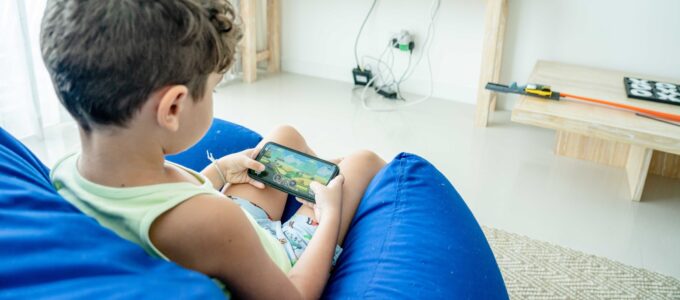
Gaming, for example, was described as a critical coping tool:
- “Gaming online is good for autistic children to decompress… without this I would have lots of meltdowns”
Removing access without providing safe alternatives risks increasing isolation—especially for children who are already excluded in offline spaces.
A rights-based way forward
Children’s Health Scotland believes we must move beyond simple restriction and towards a rights-based, balanced approach.
That means:
- Protecting children from harm through stronger regulation and safer design
- Respecting their rights to participation, information and connection
- Recognising evolving capacity, with support increasing independence over time
- Holding platforms accountable for the environments they create
- Involving children in decisions that affect their lives
Children have been clear about what they need:
They want to be safe—and they also want to be connected, included and supported.
These goals are not in conflict. In fact, they must go hand in hand.
Standing with children
We support CYPCS in calling for policies that are shaped by evidence—and by children’s voices.
Because protection without participation is not protection.
If we are serious about safeguarding children in the digital world, we must design systems that are safe by design, hold duty bearers accountable, and ensure every child can access the connection, support and opportunities they need to thrive.
You can read our full response: CHILDREN’S HEALTH SCOTLAND’S RESPONSE TO GROWING UP IN THE ONLINE WORLD
Do you want to hear from our Family Participation Group and/or our Health Rights Defenders? Then email on CYPHRS@childrenshealthscotland.org