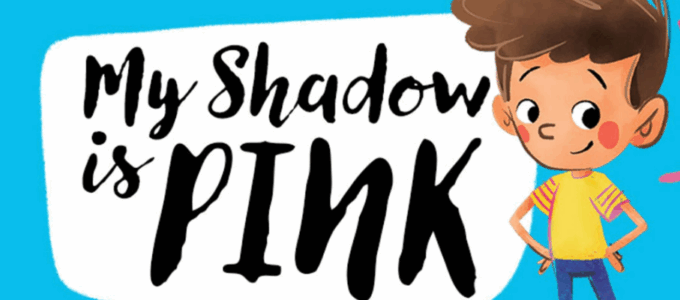
This story introduces us to a child whose “shadow” does not match the expectations placed upon them. Their interests, their expression, and their sense of self sit outside what others believe is acceptable. What follows is not just a story about difference—it is a story about visibility, courage, and the conditions children need to truly be seen.
At Children’s Health Scotland, this resonates deeply with the “Right to Be Me” within our My Health, My Rights Charter—a charter created with children and young people. This right is not abstract. It speaks to something children have told us clearly: they want to be accepted as they are, without judgement, without pressure to change, and without fear. This month’s Story with Rory invites us to pause and reflect on a simple but powerful question?
What does it mean for a child to have the right to be themselves?
In recognition of Pride Month, we are sharing My Shadow is Pink by Scott Stuart
Officer for Children’s Health Scotland, Rhianne Forrest, had this to say
I want to take a moment to thank Rory, who continues to be a passionate Health Rights Defender and a brilliant supporter of our Story with Rory series. These videos are much loved, and they create such an important space for children and young people to see their rights reflected in stories. This month’s story reminds us just how vital it is that children are recognised and respected for who they are. Gender identity is not separate from health and wellbeing—it is a fundamental part of it. In healthcare and in all spaces where children grow and learn, we must ensure that every child feels seen, heard and valued. Listening to children is not optional—it is one of their fundamental rights. When we take the time to listen, we are not just hearing words, we are affirming identity, dignity and belonging. No child should ever feel that they have to hide their ‘shadow’. Our responsibility is to create environments where children feel safe enough to be fully themselves, without fear or judgement.
Seeing the Child, Not the Expectation
My Shadow is Pink challenges us as adults. It asks whether we are truly seeing the child in front of us or whether we are seeing the version of them we expect.
Too often, children learn that parts of themselves must be hidden to belong. In the story, the “shadow” becomes a metaphor for identity: something ever-present, but not always safely expressed. The tension is not within the child, it is within the environment around them. This reflects what children and young people have told us through our work:
That being misunderstood, dismissed or judged can have a direct impact on their health and wellbeing.
A Rights-Based Lens
The UN Convention on the Rights of the Child (UNCRC) makes clear that children do not have to earn the right to be themselves—it is inherent.
- Article 2 states that all children have rights without discrimination of any kind.
- Article 8 recognises a child’s right to preserve their identity, including aspects such as culture, appearance, and gender identity.
- Article 13 affirms a child’s right to express themselves freely.
Taken together, these rights form a clear message: children have the right not only to exist, but to be recognised and respected for who they are.
Our My Health, My Rights Charter builds on this by grounding rights in lived experience. The “Right to Be Me” is not an isolated idea—it is interconnected with feeling safe, being listened to, and having trusted adults who advocate alongside you.
What This Means in Healthcare and Support
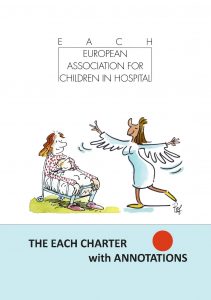
The EACH Charter reminds us that children’s rights must be upheld in healthcare settings as well as in everyday life. It emphasises that children should be treated with understanding, respect and dignity, and that their emotional and developmental needs must always be recognised.
For a child whose identity is questioned or invalidated, this becomes critically important. Respect is not only about politeness—it is about recognising the whole child, including who they are.
Similarly, Scotland’s Getting it Right for Every Child (GIRFEC) approach reinforces that children’s wellbeing must be understood holistically. Within the SHANARRI indicators, we see what “being me” looks like in practice:
- Respected – having your voice heard and valued
- Included – feeling accepted as part of your community
- Nurtured – being supported to develop a positive sense of identity
- Safe – feeling secure enough to be yourself without fear
These are not separate from identity—they depend on it.
Pride as Practice, Not Just Celebration
Pride Month offers an important opportunity to reflect—but it also asks us to act.
To uphold children’s rights means creating environments where children do not have to edit themselves to be accepted. It means listening when they tell us who they are. It means challenging the systems, assumptions and expectations that make children feel they must hide their “shadow.”
Stories like My Shadow is Pink give us a language to begin these conversations with care and honesty. But the responsibility does not sit with the story—it sits with us.
A Final Reflection
The children we work with have already told us what they need:
- To be believed.
- To be respected.
- To be safe.
- To be themselves.
The question is whether we are ready to meet them there?
Because a child’s shadow should never be something they feel they have to hide.
📝 We want to hear from you.
Whether you are a child or young person, parent or carer, student, professional or ally — your experience matters.
➡️ Take part in the national survey on children’s rights: CLICK HERE TO TAKE PART