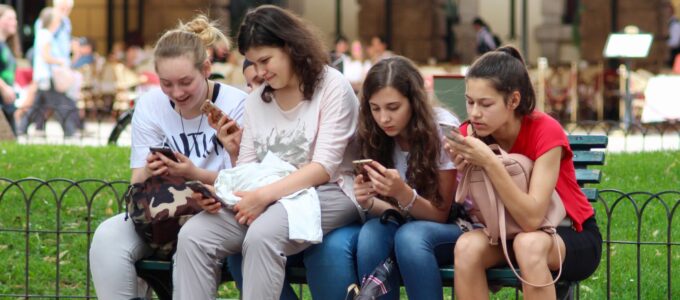
When the Scottish Government asked for views on restricting mobile phone use in schools, Children’s Health Scotland knew it was important that the voices of children, young people and families living with long-term health conditions were part of the conversation. Through our Health Rights Defenders, a group of young people who campaign for better health rights in Scotland, and our Family Participation Group, we gathered views from families and young people about what proposed restrictions could mean for children who already face barriers to education because of their health, disability or additional support needs.
While much of the public discussion around mobile phones in schools focuses on distraction, bullying and attainment, our consultation highlighted something equally important: for some children and young people, access to a phone is not about social media or entertainment. It is about health, safety, participation and inclusion.
What Families Told Us
Thirty families participated in our consultation response and many recognised the benefits that restrictions could bring.
More than 4 in 5 families supported restrictions on mobile phone use during the school day, with families highlighting improved concentration, reduced distractions, better face-to-face social interaction and reduced online harms as potential benefits.
One parent told us:
I think mobile phones in schools are detrimental to learning, focus and normal social interactions. I believe they restrict play and can be an easy source for bullying behaviour.
Another shared:
Young people and even adults are not equipped to resist the addictive nature of phones.
The message from families was clear. Restrictions may be beneficial, but they should not become a blanket ban that ignores individual need.
The Impact on Children with Health Conditions and Additional Support Needs
Throughout the consultation, families consistently raised concerns about the impact restrictions could have on children and young people with long-term health conditions, disabilities and additional support needs.
Almost 1 in 3 families were concerned about the impact on children with additional support needs, while almost 1 in 4 were concerned about children losing access to phones for medical reasons.
Families described phones as an important source of reassurance, communication and emotional regulation.
One parent explained:
My son has ADHD and ASD as well as anxiety disorder. If he couldn’t contact me through the day it would cause him to become dysregulated and go into meltdown. He also uses parts of his phone at lunch and break to regulate.
Another told us:
For my child they don’t feel safe without their phone and or smart watch, knowing they can contact us when they need and they have a right to be and feel safe.
These experiences reflect what many of our Health Rights Defenders regularly tell us: that barriers to health, education and participation are often invisible to others. What may appear to be a simple policy decision can have significant consequences for young people living with complex health conditions, anxiety, neurodivergence and disabilities.
Attendance Matters
For Children’s Health Scotland, one of the most significant findings was the potential impact on school attendance.
Children and young people with long-term health conditions already experience higher levels of absence and interrupted education. Our consultation found that 1 in 6 families believed a mobile phone ban could negatively affect their child’s attendance at school.
Parents shared powerful reflections:
-
“My child wouldn’t have the confidence to go.”
-
“She relies on support and reassurance during the day, I am concerned it will be harder for her to go without this.”
For some children, access to a phone is part of what makes attending school possible.
Families Support Reasonable Exceptions
The consultation also found strong support for flexibility.
3 in 5 families believed there should be exceptions to any restrictions, with three quarters of those families supporting exemptions for children and young people with health conditions and additional support needs.
One parent said:
“I think the phone ban should be in place. BUT all children with health conditions, hidden disabilities and special needs should be exempt.”
Another added:
“For disabled children, young carers also the children who have difficulty at the school feeling unsafe at school they need to have their mobile phone so they can connect the parents easily.”
Families were not asking for unrestricted access. They were asking for schools to retain the flexibility to make decisions based on individual circumstances and needs.
A Health Rights Issue
The Health Rights Defenders exist to ensure that children and young people are involved in decisions that affect them. This consultation demonstrated exactly why that matters.
The principles of the United Nations Convention on the Rights of the Child (UNCRC), Getting it Right for Every Child (GIRFEC) and the European Association for Children in Hospital (EACH) Charter all emphasise the importance of listening to children, protecting their health and ensuring they can fully participate in education and society.
When policies are developed, it is vital that the experiences of children with long-term health conditions, disabilities and additional support needs are not overlooked.
Michelle Wilson, Head of Children’s Services
Our Health Rights Defenders and Family Participation Group have sent a clear message. While many families recognise the benefits that sensible restrictions on mobile phones may bring, they also want decision-makers to remember that not every child experiences school in the same way.
For some children and young people living with long-term health conditions, disabilities and additional support needs, access to a phone can be a reasonable adjustment that supports their health, wellbeing, communication and ability to participate in education. We must be careful that in seeking solutions for the majority, we do not unintentionally create new barriers for those who already face significant challenges.
The UNCRC makes clear that children have the right to have their views heard and taken seriously. GIRFEC reminds us that decisions should be made around the needs of the individual child. Our families have told us that flexibility matters. They have told us that feeling safe, being able to manage anxiety, communicating with trusted adults and accessing support can be crucial to attending school and participating in learning.
Children’s voices must be at the heart of this debate. We cannot afford to forget disabled children and young people or those living with long-term health conditions when developing national policy. Their experiences matter, their rights matter, and their voices deserve to be heard.
Ensuring No Child Is Left Behind
The strongest message from our consultation was not that families oppose restrictions. Instead, it was that any approach must be balanced, proportionate and child-centred.
As Scotland considers the future of mobile phone use in schools, Children’s Health Scotland will continue working with our Health Rights Defenders and Family Participation Group to ensure the voices of children and young people with long-term health conditions are heard.
Because when decisions are made about education, health and wellbeing, no child’s voice should be left behind.